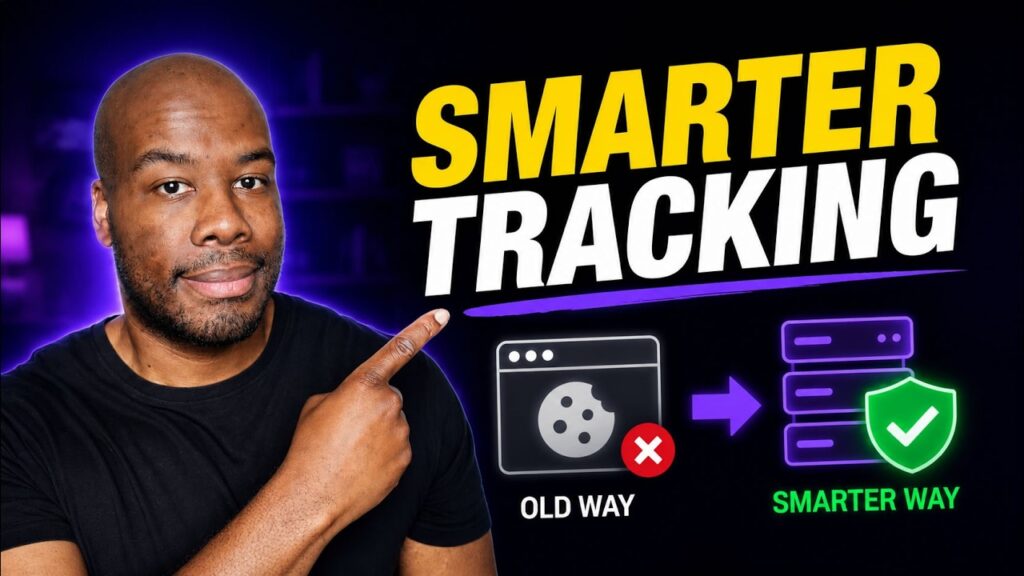
Why Server-Side Tagging Is Becoming Essential for Google Ads Success
If your Google Ads campaigns aren't performing as well as expected, the problem may not be your targeting, keywords or bidding strategy. It could simply be your conversion tracking.
Google Ads relies heavily on accurate conversion data to optimise campaigns. When that data is incomplete or inaccurate, Google's Smart Bidding algorithms are making decisions based on an incomplete picture.
This is where server-side tagging comes in.
While it may sound like a highly technical concept, the principle is actually quite straightforward: better tracking data leads to better campaign optimisation. As privacy regulations tighten and browser restrictions become more aggressive, server-side tagging is increasingly becoming one of the most valuable upgrades businesses can make to their tracking infrastructure.
What Is Server-Side Tagging?
To understand server-side tagging, it's helpful to first understand how traditional conversion tracking works.
Traditional (Client-Side) Tracking
Most Google Ads advertisers use what's known as client-side tracking.
Here's the typical process:
- A user clicks your Google Ad.
- They visit your website.
- They complete a conversion, such as submitting a form or making a purchase.
- A tracking tag fires within the user's browser.
- That conversion is sent directly to Google Ads.
Whether you're using the standard Google Tag or Google Tag Manager, this is how the vast majority of websites currently send conversion data to advertising platforms.
While this approach has worked well for years, it's becoming increasingly unreliable.
Why Traditional Tracking Is Becoming Less Reliable
Several major changes in online privacy have made browser-based tracking significantly less dependable than it once was.
1. Browser Privacy Restrictions
Modern browsers such as Google Chrome, Safari and Firefox now place much greater emphasis on protecting user privacy.
They increasingly:
- Restrict tracking technologies
- Limit cookie lifespans
- Prevent certain tracking behaviours
- Introduce new privacy protections
These changes are designed to give users greater control over their personal data, but they also reduce the amount of information advertisers receive.
2. Cookie Consent Requirements
Cookies have become heavily regulated across many countries, particularly within the UK and European Union.
Users can now choose not to accept marketing cookies.
When that happens:
- Your website may still generate the lead or sale.
- Your business still receives the enquiry.
- Google Ads may never record the conversion.
This creates a major optimisation problem.
Google's bidding algorithms can only optimise towards conversions they actually receive. Missing conversion data means the platform has fewer signals to learn from, ultimately reducing campaign performance.
3. Ad Blockers
Ad blockers don't simply stop adverts from appearing.
Many modern ad blockers also interfere with tracking scripts and cookies used by advertising platforms.
As their popularity continues to grow, they represent another source of lost conversion data, further reducing the quality of information available inside your Google Ads account.
How Server-Side Tagging Works
Server-side tagging changes where conversion data is processed.
Instead of sending conversion information directly from the visitor's browser to Google Ads, the data is first sent to your own tracking server.
The process looks like this:
- A visitor completes a conversion.
- The event is sent to your tracking server.
- Your server processes the information.
- Your server forwards the conversion to Google Ads.
Because you control the server, you have far greater reliability and flexibility over how your data is collected and transmitted.
The Benefits of Server-Side Tagging
Moving tracking to your own server offers several important advantages.
More Accurate Conversion Tracking
The biggest benefit is improved data quality.
Because your tracking is less dependent on browser behaviour, you're able to recover more conversion events that might otherwise be lost through browser restrictions, cookie limitations or ad blockers.
More complete conversion data means Google Ads has a much clearer understanding of which users are converting.
Better Smart Bidding Performance
Google's automated bidding strategies depend entirely on conversion signals.
When more conversions are accurately recorded, Smart Bidding has:
- More data points
- Better learning opportunities
- Greater confidence when adjusting bids
- Improved optimisation over time
Quite simply:
Better data leads to better bidding decisions.
Greater Control Over Your Data
Since conversion data first arrives on your own server, you have more flexibility over how it's handled.
For example, you can:
- Review incoming data before forwarding it
- Control which platforms receive specific events
- Improve data consistency across marketing channels
This additional control becomes increasingly valuable as privacy regulations continue to evolve.
If It's So Good, Why Isn't Everyone Using It?
Despite its advantages, server-side tagging is still relatively uncommon.
There are several reasons why.
Lack of Awareness
Many business owners simply don't know server-side tagging exists.
Most Google Ads setup guides focus on traditional tracking methods because they're simpler to implement and easier for beginners.
Unless you've specifically researched advanced analytics, server-side tagging may never appear on your radar.
It's More Technically Complex
Unlike simply adding the Google Tag or configuring Google Tag Manager, server-side tagging requires considerably more technical knowledge.
Implementation often involves:
- Setting up a dedicated tracking server
- Configuring server containers
- Managing DNS settings
- Testing end-to-end tracking
- Troubleshooting technical issues
This usually extends beyond the skills of many advertisers and enters the realm of web developers or analytics specialists.
There Are Ongoing Costs
Server-side tagging isn't free.
Businesses typically need:
- A hosted tracking server
- Specialist implementation
- Ongoing maintenance
Many agencies use third-party services such as Stape to simplify server hosting, but these platforms also introduce recurring costs.
It Isn't Always the First Priority
For advertisers with very small budgets or newly launched campaigns, improving targeting, keywords, landing pages or ad copy may produce larger gains than investing in advanced tracking.
Server-side tagging often becomes most valuable once the core campaign fundamentals are already performing well.
At that stage, improving tracking accuracy can unlock further performance improvements that would otherwise be difficult to achieve.
Who Should Consider Server-Side Tagging?
While every business can potentially benefit, server-side tagging is particularly valuable for organisations that:
- Spend significant amounts on Google Ads
- Rely heavily on Smart Bidding strategies
- Generate large volumes of leads or sales
- Want the most accurate attribution possible
- Are planning for future privacy changes
As browser restrictions continue to increase, businesses that invest in better tracking today are likely to have a competitive advantage over those relying solely on traditional client-side tracking.
Preparing for the Future of Digital Advertising
The overall direction of digital marketing is clear.
Privacy regulations continue to tighten.
Browsers continue restricting cookies.
Users expect greater control over their personal information.
As these trends continue, relying exclusively on browser-based tracking will likely become increasingly problematic.
Many forward-thinking agencies are already making server-side tagging their default implementation for new Google Ads clients because they recognise where digital advertising is heading. Rather than waiting for tracking quality to deteriorate further, they're building more resilient measurement systems today.
Final Thoughts
Accurate conversion tracking has always been one of the foundations of successful Google Ads campaigns. As privacy changes continue to reshape digital advertising, maintaining that accuracy is becoming more challenging.
Server-side tagging provides a practical solution by improving the reliability of your conversion data and giving Google's bidding algorithms more complete information to work with.
Although implementation requires additional technical expertise and investment, businesses running mature Google Ads campaigns may find the improved tracking quality more than justifies the effort.
If you're already investing heavily in Google Ads, ensuring your conversion data is as accurate as possible could be one of the highest-impact improvements you make to your account.