The Biggest Google Ads Mistakes Advertisers Still Make in 2026
Google Ads has evolved dramatically over the past decade. Smart bidding, AI-powered campaign types and advanced automation have transformed how advertisers manage campaigns. Yet despite all these advancements, many businesses continue to make the same costly mistakes that damage performance, increase costs and reduce return on investment.
After years of managing Google Ads campaigns and overseeing significant advertising budgets, it is clear that even experienced advertisers can fall into common traps. Whether you are running a small local campaign or managing a large advertising account, avoiding these mistakes can make a significant difference to your results.
In this article, we explore some of the most common Google Ads mistakes and explain how to avoid them.
1. Focusing Too Much on Ad Position
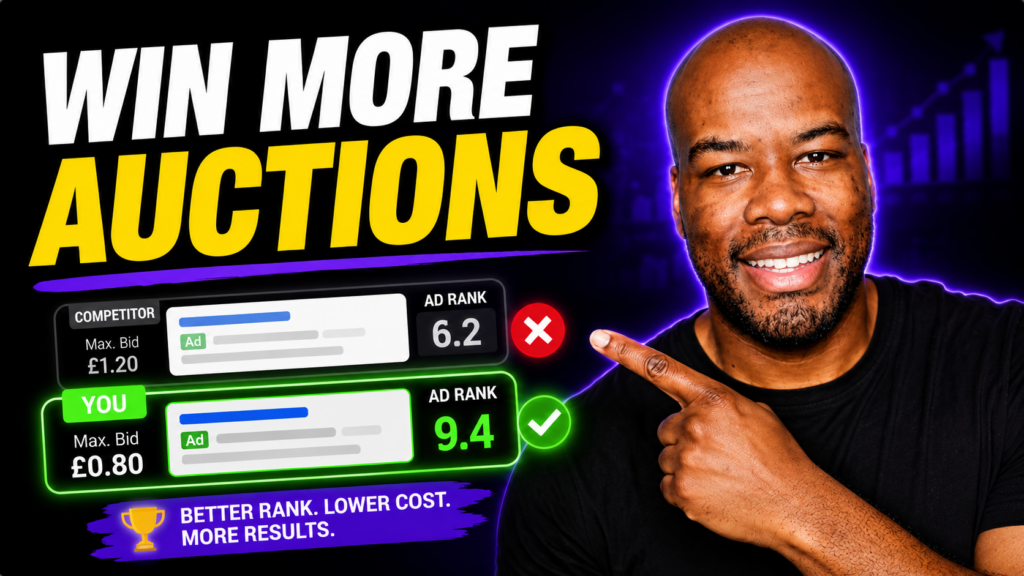
One of the most persistent misconceptions in Google Ads is the obsession with achieving the number one position.
Years ago, when Manual CPC bidding was the dominant strategy, advertisers often competed aggressively for the top spot. However, modern Google Ads campaigns are designed to optimise towards conversions, revenue and profitability rather than visibility alone.
While appearing at the top of the search results may seem desirable, it does not automatically lead to better business outcomes.
Why Chasing Position One Can Be Harmful
Prioritising ad position often leads to:
- Higher cost per click (CPC)
- Increased cost per acquisition (CPA)
- Lower return on ad spend (ROAS)
- Reduced profitability
Bidding strategies that maximise visibility, such as Target Impression Share or unrestricted Maximise Clicks, can easily push ads into the top position. However, this often comes at the expense of conversion efficiency.
The most successful advertisers focus on revenue and profitability rather than vanity metrics.
2. Running Search and Display Together
When creating a new Search campaign, Google often encourages advertisers to include both the Display Network and Search Partners.
For many businesses, this is a mistake.
Search and Display Have Different Objectives
Search advertising targets users actively looking for products or services. These users already have intent and are often much closer to making a purchasing decision.
Display advertising, on the other hand, focuses on awareness and prospecting by placing ads in front of users who may not yet be actively searching.
Combining these objectives into a single campaign can dilute performance and make optimisation more difficult.
A Better Approach
For most advertisers:
- Run Search campaigns independently.
- Focus budgets on capturing existing demand.
- Introduce Display campaigns separately when budgets and campaign maturity allow.
This provides greater control and clearer performance data.
3. Starting with Maximise Conversions Too Early
Smart bidding can be incredibly powerful, but many advertisers activate Maximise Conversions before they have sufficient data.
This often results in excessive spending and unpredictable performance.
Why This Happens
When Google has little or no conversion history, it must aggressively test traffic sources and bidding levels to identify potential converters.
As a result:
- CPCs may rise significantly.
- Budgets can be spent rapidly.
- Traffic quality can be inconsistent.
A Better Starting Point
New campaigns often benefit from starting with:
- Maximise Clicks
- Manual CPC
These strategies allow advertisers to:
- Evaluate traffic quality.
- Build conversion data.
- Identify negative keywords.
- Refine campaign structure.
Once sufficient conversion data has been collected, transitioning to Maximise Conversions becomes much more effective.
4. Leaving Auto-Apply Recommendations Enabled
Many new Google Ads accounts have Auto-Apply Recommendations switched on by default.
While this may sound helpful, it can lead to unwanted and potentially damaging changes.
What Auto-Apply Recommendations Can Change
Google may automatically:
- Switch keyword match types.
- Adjust bidding strategies.
- Expand targeting.
- Introduce automated features.
- Modify campaign settings.
Although these recommendations are designed to improve performance, they often push accounts towards aggressive automation before the campaign is ready.
Why Manual Control Matters
Successful Google Ads management requires careful testing and strategic decision-making.
Turning off Auto-Apply Recommendations ensures that every change is reviewed and approved before implementation.
5. Using AI Features Before Your Account Is Ready
Google continues to invest heavily in AI-powered advertising solutions.
While these tools can produce excellent results in mature accounts, many advertisers activate them too early.
The three most common examples are:
- Broad Match
- AI Max (AIAX)
- Performance Max (PMax)
Broad Match
Modern Broad Match relies heavily on machine learning and conversion data.
When enough data exists, it can identify valuable search intent beyond exact keyword matches.
However, accounts with limited conversion history often experience:
- Irrelevant search queries
- Reduced traffic quality
- Increased spending
Broad Match should generally be introduced gradually after a campaign has already demonstrated strong conversion performance.
Performance Max
Performance Max allows advertisers to access:
- Search
- Shopping
- Display
- YouTube
- Discover
- Gmail
through a single campaign.
While powerful, Performance Max depends heavily on quality conversion data.
Launching it before establishing a successful Search campaign often leads to poor results and limited control.
AI Max
AI Max takes automation even further by reducing the importance of keywords and relying heavily on conversion signals.
For businesses generating large numbers of conversions every day, AI Max may unlock additional growth opportunities.
For smaller advertisers with limited conversion volume, however, it often struggles to produce reliable results.
6. Incorrect Campaign Budgeting
Budgeting mistakes are surprisingly common and can significantly impact performance.
Under-Budgeting Campaigns
Some industries have extremely high CPCs.
For example:
- Legal services
- Financial services
- Insurance
In these sectors, a daily budget that appears substantial may only generate a handful of clicks.
If your budget cannot support enough traffic volume to generate conversions, campaign performance will suffer.
Over-Budgeting Campaigns
The opposite problem can also occur.
When campaigns have excessively high budgets, Google may increase bids simply to spend the available allocation.
This can lead to:
- Inflated CPCs
- Reduced efficiency
- Little or no increase in conversion volume
Finding the Right Budget
A successful budget should:
- Align with industry CPC levels.
- Reflect the value of each conversion.
- Generate enough traffic to produce statistically meaningful data.
- Support sustainable business growth.
Google Keyword Planner can provide useful forecasting to help determine an appropriate starting budget.
7. Writing Generic Ads
Many advertisers treat Google Ads copy as a collection of keywords rather than an actual advertisement.
This is a major missed opportunity.
What Makes an Effective Google Ad?
Strong ads focus on:
- Unique selling propositions (USPs)
- Customer benefits
- Problem solving
- Trust signals
- Social proof
Most search results pages are filled with generic messaging. Advertisers who clearly communicate their competitive advantages are more likely to attract clicks.
Ask Yourself
What makes your business different?
Examples may include:
- Fast delivery
- Award-winning service
- Industry expertise
- Price guarantees
- Exceptional customer support
These differentiators should be highlighted prominently throughout your ads.
8. Poor Keyword Segmentation
Campaign structure remains one of the most important foundations of Google Ads success.
A common mistake is grouping unrelated keywords together.
Why Segmentation Matters
Well-structured ad groups allow advertisers to create highly relevant ads.
For example, a vehicle repair business may have separate ad groups for:
- Car servicing
- General repairs
- Transmission repairs
Each group can then have dedicated ad copy tailored to that specific service.
Avoid Over-Segmentation
While relevance is important, creating a separate ad group for every keyword variation is no longer necessary.
The old Single Keyword Ad Group (SKAG) approach is largely outdated.
Instead, group closely related keywords together while maintaining enough separation to create meaningful ad relevance.
9. Ignoring Ad Assets
Ad assets are one of the easiest ways to improve ad visibility and performance.
Yet many advertisers fail to use them effectively.
Important Assets to Implement
Callout Assets
Callouts allow you to highlight:
- Free delivery
- 24/7 support
- Price guarantees
- Industry certifications
Structured Snippets
These showcase specific services, products or categories offered by your business.
Image Assets
Strong images can improve engagement and make your listings more visually appealing when Google chooses to display them.
The Benefits of Using Assets
Proper asset implementation can:
- Increase click-through rate (CTR)
- Improve ad quality
- Enhance ad rank
- Improve user experience
Ultimately, assets help advertisers occupy more space on the search results page and stand out from competitors.
10. Listening to Every Google Ads Representative
Perhaps the most controversial mistake is blindly following advice from Google Ads representatives.
While some high-level account managers can provide valuable strategic guidance, many advertisers receive recommendations from representatives whose primary objective is increasing platform adoption and advertising spend.
Common Recommendations That Cause Problems
Advertisers are frequently encouraged to:
- Enable Broad Match immediately.
- Launch Performance Max prematurely.
- Increase automation levels.
- Expand budgets aggressively.
- Activate new AI features before sufficient data exists.
Evaluate Advice Carefully
Every business is different.
Before implementing recommendations, ask:
- Does this align with my business objectives?
- Do I have enough conversion data?
- Has the current campaign structure been fully optimised?
- Can I measure the impact accurately?
Not every recommendation is bad, but every recommendation should be tested critically rather than accepted automatically.
Final Thoughts
Google Ads continues to become more sophisticated, but the fundamentals remain unchanged. Success comes from maintaining control, understanding your data and making decisions based on business outcomes rather than platform recommendations.
The most common mistakes advertisers make include:
- Chasing ad position.
- Mixing Search and Display campaigns.
- Using smart bidding too early.
- Leaving automation unchecked.
- Activating AI features prematurely.
- Budgeting incorrectly.
- Writing weak ad copy.
- Structuring campaigns poorly.
- Ignoring ad assets.
- Following every recommendation from Google representatives.
Avoiding these pitfalls can dramatically improve campaign performance, reduce wasted spend and create a more sustainable path to growth.
As Google Ads becomes increasingly automated, advertisers who understand the fundamentals and apply automation strategically will continue to outperform those who simply hand over control to the platform.