Why Your Google Ads Have Suddenly Lost Impressions: 6 Common Causes Explained
If you have logged into your Google Ads account recently and noticed a sudden drop in impressions, you are not alone. One day your campaigns appear healthy, and the next your ads barely seem to serve at all.
A sharp decline in impressions can be frustrating, especially when everything appears to be set up correctly. However, there are several common reasons why Google Ads campaigns suddenly stop showing as often as they once did.
In this guide, we will break down the six most common causes of impression drops in Google Ads and explain what you can do to resolve them.
1. Significant Changes to Your Campaigns
One of the most common reasons for a sudden drop in impressions is making major edits to your campaigns.
Google Ads relies heavily on machine learning and historical performance data. When you make substantial changes, the system often needs time to relearn how to optimise delivery.
Examples of Significant Edits
Some examples include:
- Increasing or decreasing your budget
- Changing bidding strategies
- Launching new adverts
- Adjusting targeting settings
- Switching from Manual CPC to Target CPA
- Moving from Target CPA to Maximise Conversion Value
Although these changes may seem positive, Google often temporarily reduces serving while it recalibrates performance expectations.
How Long Does Recovery Take?
Many advertisers expect campaigns to recover within a day or two, but that is not always realistic.
In some cases:
- Minor changes may stabilise within 48–72 hours
- Larger changes can take 5–7 days
- Complex accounts may take even longer
If your impression drop started shortly after a major campaign adjustment, patience may be all that is required.
2. Competitors Are Becoming More Aggressive
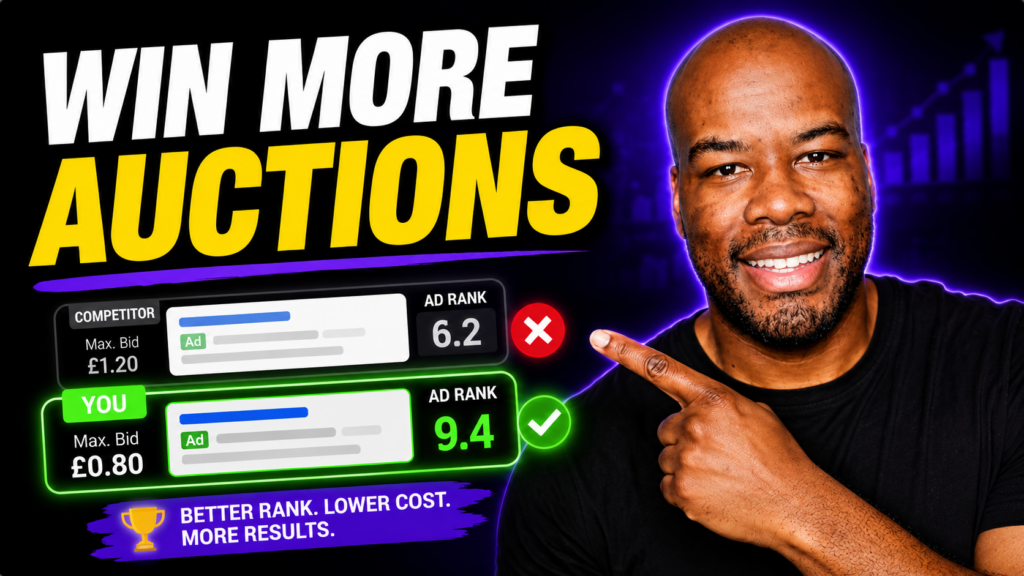
Google Ads is an auction-based platform. If competitors become more aggressive with their bidding, your visibility can decline rapidly.
How This Happens
Imagine your campaign is targeting a £50 CPA. If competitors are willing to pay:
- £60 per conversion
- £70 per conversion
- Higher manual CPC bids
they may start winning more auctions than you.
As a result:
- Your ads appear less frequently
- Impression share decreases
- Click volume falls
Your Two Options
Unfortunately, there are usually only two choices:
Option 1: Increase Aggression
You can:
- Raise your bids
- Relax CPA targets
- Increase budgets
This may restore impression volume, but it usually increases costs.
Option 2: Maintain Efficiency
You can keep your current targets and accept:
- Lower impression volume
- Reduced traffic
- Fewer conversions
For many businesses, maintaining profitability is more important than chasing volume at any cost.
3. Your Ads Have Received “Limited” Status
Another common reason for impression loss is Google assigning your ads a “Limited” status.
This can happen for several reasons, including:
- Trademark concerns
- Sensitive industries
- Website quality issues
- Restricted products or services
When this occurs, Google deliberately limits ad exposure.
Industries Commonly Affected
Industries frequently impacted include:
- Gambling
- Pharmaceuticals
- Financial services
- Alcohol-related products
- High-risk products
Google may decide to restrict impressions to protect users from potentially sensitive or regulated content.
Trademark and Reseller Issues
You may also encounter limited status if:
- You resell branded products
- You lack authorisation from the brand owner
- You bid on restricted brand terms
For example, reselling products like iPhones without proper permissions can trigger restrictions.
Poor Mobile Experience
A lesser-known reason for limited status is poor website performance on mobile devices.
If your site:
- Loads slowly
- Breaks on mobile
- Has poor usability
- Creates a frustrating user experience
Google may reduce your ad exposure.
In 2026, a mobile-friendly website is no longer optional. A poor mobile experience can directly impact your campaign visibility.
4. Seasonal Trends and Market Changes
Sometimes nothing is actually wrong with your campaigns at all.
Many industries experience natural fluctuations throughout the year.
Seasonal Demand Changes
Examples include:
- Furniture retailers slowing during summer
- Fitness products surging in January
- Travel campaigns peaking during holiday seasons
- Retail increasing during Black Friday and Christmas
If your industry is entering a slower period, impression declines may simply reflect reduced search demand.
External Economic Factors
External events can also significantly impact impressions.
Examples include:
- Economic downturns
- Energy crises
- Inflation
- Industry regulation changes
- Supply chain disruptions
For example, during the UK energy crisis, fewer consumers searched for energy switching services because prices increased across the board. Search demand dropped dramatically, causing impression declines throughout the sector.
Review Historical Trends
Before panicking, compare your data against:
- Previous years
- Seasonal benchmarks
- Industry-wide trends
You may discover your performance is perfectly normal for that time of year.
5. Your Smart Bidding Targets Are Too Aggressive
Smart bidding can be extremely effective, but overly aggressive targets often strangle campaign volume.
A Common Mistake
Suppose your campaign currently generates conversions at £40 CPA.
You may think:
“If I lower my target to £30, I will get more leads for the same spend.”
While lowering CPA targets can improve efficiency, pushing too aggressively can reduce impressions dramatically.
Why This Happens
When Google tries to hit stricter targets:
- It enters fewer auctions
- It bids less aggressively
- It avoids expensive traffic
- It narrows targeting opportunities
As a result:
- Impressions decline
- Click volume drops
- Conversions may decrease
ROAS Targets Can Cause Similar Issues
The same principle applies to ROAS bidding.
If you aggressively increase your target ROAS, Google becomes more selective about where and when your ads appear.
This often reduces campaign reach significantly.
What to Do Instead
Make bidding adjustments gradually.
For example:
- Reduce CPA targets incrementally
- Increase ROAS goals slowly
- Allow campaigns time to adapt
Sudden aggressive changes usually hurt delivery more than they help performance.
6. Overusing Negative Keywords
Negative keywords are essential for filtering irrelevant traffic, but too many negatives can severely restrict campaign reach.
This is one of the most overlooked causes of impression decline.
How Accounts Become “Strangled”
Over time, advertisers often accumulate:
- Thousands of negative keywords
- Old legacy exclusions
- Broad blocking terms
- Overly restrictive lists
Eventually, these negatives begin blocking valuable traffic opportunities.
Signs of an Over-Restricted Account
You may notice:
- Additional budget has no impact
- Impression growth stalls
- Traffic volume remains low
- Search volume appears much higher than campaign reach
In many account audits, large gaps exist between available search demand and actual impression volume simply because negative keyword lists became too aggressive.
Smart Bidding and Search Intent
Modern Google Ads relies heavily on user signals, not just exact search terms.
Google now considers:
- Search history
- User behaviour
- In-market intent
- Conversion likelihood
This means a search term that initially looks irrelevant may still convert well because Google understands the user behind the search.
Give Search Terms Time to Perform
Instead of instantly blocking unfamiliar searches:
- Allow terms to gather data
- Evaluate conversions before excluding
- Focus on truly irrelevant traffic
- Avoid over-filtering broad match campaigns
Many advertisers are surprised by which search terms eventually drive conversions.
Final Thoughts
A sudden drop in Google Ads impressions does not always mean your account is broken.
In many cases, the cause is one of these six common issues:
- Significant campaign edits
- Increased competition
- Limited ad status
- Seasonal demand shifts
- Overly aggressive bidding targets
- Excessive negative keywords
The key is identifying which factor applies to your account before making reactive changes.
Sometimes the solution is patience. Other times, it requires strategic adjustments to bidding, targeting, or campaign structure.
By understanding these common causes, you can diagnose impression drops more effectively and keep your Google Ads campaigns performing consistently over time.