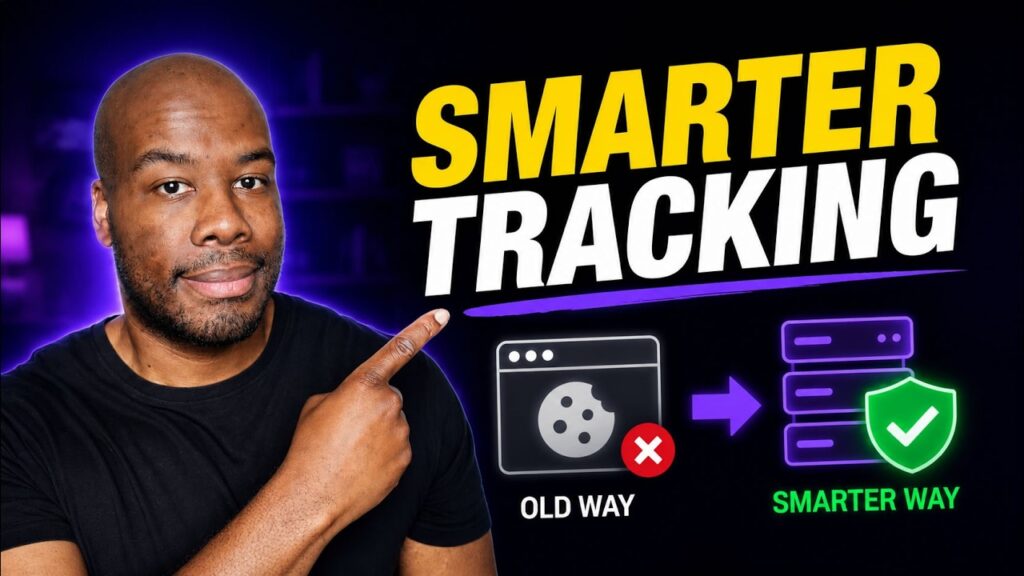
Is Google Ads Price Fixing Your Campaigns? The Smart Bidding Debate Every Advertiser Needs to Hear
Google Ads advertisers have spent years adapting to automation. Smart bidding, automated campaigns, AI-driven optimisation, enhanced conversions and GA4 integrations have all become central parts of modern PPC management.
For many businesses, these tools genuinely improve results.
But what if the same automation helping you scale is also quietly increasing your advertising costs behind the scenes?
That is the explosive question raised in a recent discussion featuring Google Ads strategist John Moran on the Perpetual Traffic podcast. The claims made in the discussion are controversial, highly technical and, if accurate, potentially one of the biggest revelations in modern PPC advertising.
The core theory?
Google may be using conversion data and smart bidding signals to systematically increase CPCs based on how valuable conversions are to your business.
And the evidence presented is difficult to ignore.
Why This Discussion Matters
Most advertisers have already noticed several trends over the last few years:
- CPCs have risen dramatically
- Scaling campaigns has become harder
- Increased budgets often fail to generate proportional increases in conversions
- Smart bidding frequently outperforms manual CPC initially
- Eventually, many campaigns appear to hit a ceiling
These frustrations are common across Google Ads accounts of all sizes.
Traditionally, Google explains this behaviour as a natural consequence of competition and auction dynamics. More budget means access to more auctions, which leads to higher CPCs.
That explanation has generally been accepted.
However, John Moran’s testing suggests something far more aggressive may be happening.
The Core Theory: Google Knows What You Value Most
The theory presented in the podcast is straightforward:
Google understands exactly how valuable a conversion is to your business because advertisers willingly provide that data through:
- Conversion tracking
- Enhanced conversions
- GA4 integration
- CRM imports
- Smart bidding strategies
- Target CPA
- Target ROAS
Once Google knows your acceptable CPA or ROAS targets, it may increase CPCs accordingly.
In simple terms:
If Google knows you are profitable at £20 per lead, why would it continue charging £5 per click if it believes you can afford £8 or £10?
This is the central accusation.
And according to the examples shown, the data appears to support it.
The Evidence Presented in the Podcast
John Moran demonstrated several campaign experiments that revealed unusual patterns inside Google Ads.
The most striking example involved a shopping campaign selling landscaping materials.
The only change made each week was a budget increase.
No keyword changes.
No bidding changes.
No audience changes.
No optimisation adjustments.
Yet every time the budget increased, CPCs increased alongside it.
The pattern repeated consistently.
This suggests that budget increases alone may trigger more aggressive CPC inflation within automated bidding systems.
Why Advertisers Feel “Stuck” at Scale
This theory also explains a common frustration many advertisers experience:
Initial Scaling Works Well
When moving from manual CPC to smart bidding:
- Conversion volume often improves
- CPA can initially decrease
- Google’s automation finds new opportunities
- Campaigns become more efficient
For many businesses, this stage feels excellent.
Eventually Performance Plateaus
After reaching a certain spend level:
- CPCs rise sharply
- ROAS declines
- CPA increases
- Additional spend fails to produce proportional returns
Advertisers often describe this as “hitting the ceiling”.
According to the discussion, this ceiling may not simply be competition.
It may be Google intentionally extracting more value from advertisers once profitability thresholds are identified.
The Most Controversial Test: Removing Conversion Tracking
The most shocking part of the discussion came when John Moran described an experiment involving the removal of active conversion tracking.
This sounds completely counterintuitive.
Every modern PPC strategy revolves around feeding Google more conversion data.
Yet the results were astonishing.
What Happened After Conversion Tracking Was Disabled?
The experiment involved:
- Switching from smart bidding to manual CPC
- Removing active conversion signals
- Maintaining a valid historical conversion action
- Running campaigns without Google optimising toward current conversions
The expectation should have been:
- Lower visibility
- Poorer traffic quality
- Fewer impressions
- Reduced positioning
Instead, the opposite occurred.
The campaign saw:
- Lower CPCs
- Higher impression share
- Better click-through rates
- Increased traffic
- Improved positioning
Most importantly:
Sales Increased
Backend business revenue reportedly increased significantly despite Google no longer receiving live optimisation data.
That is the key point.
Because if true, it challenges one of the foundational assumptions of smart bidding.
Why This Completely Contradicts Auction Logic
Google Ads is supposed to operate as an auction.
Traditionally:
- Higher bids win more visibility
- Lower bids lose positioning
- Cheaper traffic receives lower priority
But the experiment showed manual CPC campaigns bidding below recommended first-page estimates while still gaining visibility.
That should not happen in a pure auction environment.
This is why the discussion has generated so much attention.
The Role of Enhanced Conversions and GA4
The conversation also raised concerns about why Google pushes advertisers so aggressively toward:
- GA4
- Enhanced conversions
- Server-side tracking
- CRM integrations
- Consent mode
Officially, these tools improve attribution.
But critics argue they also give Google deeper insight into:
- Revenue per conversion
- Lead quality
- Customer value
- Sales outcomes
- Acceptable acquisition costs
The more Google knows about your profitability, the more accurately it can estimate how much you are willing to pay.
That is the concern.
Is Manual CPC Making a Comeback?
For years, manual CPC has been considered outdated.
And honestly, for many advertisers, smart bidding genuinely works better.
Numerous campaigns improve dramatically when moving from manual bidding to automation.
However, the discussion suggests something important:
Smart Bidding May Be Excellent for Initial Growth
But manual CPC could potentially become useful again once campaigns mature and reach scaling limitations.
This does not mean every advertiser should immediately abandon automation.
Far from it.
For many smaller advertisers:
- Smart bidding still delivers excellent results
- Automation reduces management complexity
- Conversion data improves campaign learning
But for larger, mature campaigns experiencing prolonged stagnation, testing alternative structures may now be worth considering.
The Real Risk of Smart Bidding Dependence
One of the biggest dangers raised in the discussion is platform dependency.
When advertisers fully rely on Google’s automation:
- Google controls bidding
- Google controls auction participation
- Google controls optimisation
- Google controls attribution
- Google controls conversion interpretation
That creates a massive imbalance of information.
Advertisers only see the front-end dashboard.
Google sees everything.
Should Advertisers Panic?
No.
Despite the controversy, Google Ads remains one of the most effective advertising platforms available.
People actively search for products and services on Google with clear commercial intent.
That will not change anytime soon.
Even John Moran himself continues running Google Ads campaigns successfully.
The issue is not whether Google Ads works.
The issue is whether advertisers fully understand how the system may be operating behind the scenes.
What Advertisers Should Actually Do
Rather than panicking, advertisers should become more analytical and cautious.
Here are some practical takeaways.
1. Monitor Scaling Carefully
If increasing budget consistently leads to:
- Higher CPCs
- Worse CPA
- Flat conversion growth
You may be approaching a scaling ceiling.
2. Watch for Diminishing Returns
More spend should ideally generate more conversions.
If spend rises while conversions stagnate, deeper investigation is needed.
3. Test Strategically
Large mature accounts may benefit from carefully controlled experiments involving:
- Manual CPC
- Reduced automation
- Alternative conversion actions
- Different attribution setups
These tests should always be performed cautiously.
4. Focus on Real Business Results
Dashboard metrics matter less than:
- Revenue
- Profitability
- Lead quality
- Sales outcomes
Backend CRM data is often more important than Google Ads reporting alone.
5. Avoid Blind Trust in Automation
Automation is a tool.
Not a strategy.
Advertisers should still understand:
- Auction mechanics
- Bid behaviour
- Scaling patterns
- Conversion economics
Blind reliance on automation can become dangerous.
Final Thoughts
The claims raised in this discussion are controversial, but they align with frustrations many advertisers have experienced for years.
The idea that Google may increase CPCs based on known conversion value is no longer just a conspiracy theory discussed in PPC forums.
There is now practical testing and observable data suggesting it could be happening.
Whether Google intentionally designed these systems this way or whether they are unintended consequences of machine learning optimisation remains open to debate.
What is certain is this:
Advertisers need to understand that modern Google Ads is no longer a simple auction platform.
It is an AI-driven ecosystem where data, automation and profitability signals heavily influence campaign behaviour.
And the more data advertisers give Google, the more influence Google may gain over pricing dynamics.
That does not mean you should stop advertising on Google.
But it does mean you should stop assuming the platform always acts purely in your best interest.
Ultimately, the smartest advertisers will be the ones willing to test, question assumptions and focus relentlessly on real business outcomes rather than simply trusting automated recommendations.